
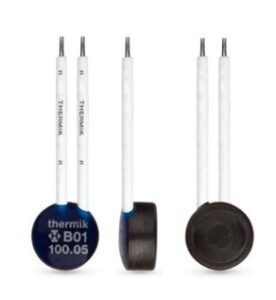
B01 |
F01 |
 |
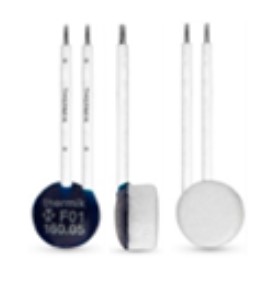 |
| Switch type: | NC contact B01 resetting | NC contact F01 resetting |
| isolated: | yes | yes |
| Temperature | ||
| Nominal switching temperature (NST), in 5 K steps [°C] | 60 -200 | |
| Tolerance range -Standard- Tol [ [K] | +/- 5 | |
| Reverse Switch Temperature (RST below NST) UL [K] Reverse Switch Temperature (RST below NST) VDE [°C] |
-35 ± 15 ≥35 |
|
| Tension | ||
| max. operating voltage range up to … | 500 V AC / 14 V DC | |
| Rated voltage AC [VAC] | 250 ( VDE), 277 (UL) | |
| Current/switching cycles | ||
| Rated current AC – cos φ = 1.0 [A] / [n] | 2,5 / 10’000 | |
| Rated current AC – cos φ = 0.6 [A] / [n] | 1,6 / 10’000 | |
| Max. Switching current AC- cos φ = 1.0 [A] / [n] | 6,3 / 3’000 7,5 / 300 | |
| Rated current AC – cos φ = 0.4 [A] / [n] | 1,8 / 10’000 | |
| Max. Switching current AC- cos φ = 0.4 [A] / [n] | 7,2 / 1’000 | |
| Rated voltage DC [V] | 12 | |
| Max. Switching current DC [A] / [n] | 40,0 / 10’000 | |
| Additional specifications | ||
| High-voltage strength [kV] | 2 | |
| Total bounce time [ms] | < 1 | |
| Contact resistance (according to MIL-STD R5757) [mΩ] | 50 | |
| Vibration resistance 10 … 60 Hz [m/s2] | 100 | |
| Compressive strength of the switch housing [N] | 450 | |
| Suitable for installation in protection class | I + II | |
| Impregnation resistance | suitable | |
| Available Licenses and Approvals | ||
| please specify | IEC, ENEC, VDE, UL, CSA, CQC | |
| Dimensions (standard) | ||
| Diameter Ø d [mm] | 10,0 | 9,4 |
| Overall height h [mm] | from 5.1 | from 5.4 |
| Standard stranded wire connection: | 0.25 mm2/AWG 22 | |
| Characteristics of current dependence | ||
| The special feature of the 01 and 02 series is that they are temperature-sensitive switches. In their rated operation (rated current), they exhibit very low self-heating due to the current. Therefore, a switching point reduction takes place at most within the nominal switching temperature tolerance. | ||
B01 |
F01 |
 |
 |
Note
The data and information provided are based on tests and test series. They are intended as a guide, which is why there may be deviations for individual applications and uses. The suitability in a specific application must be checked by the user in each individual case.